Famous warrior poets include Archilochus of ancient Greece, the Viking skald Egil Skallagrímsson, the samurai Miyamoto Musashi, the Elizabethan soldier Sir Philip Sidney and the First World War officer Wilfred Owen. Below are forty men who went to war and wrote, arranged by era, each with the facts of their service and the work they left.
We chose these figures using the same three tests we use across the site: they faced real danger, met it over time, and left writing that grew out of it. The list concentrates on soldiers, sailors and fighters. Other kinds of warrior poets, such as people who endured illness, prison or exile, have their own pages in our Hard Times section.
The Ancient World
The tradition’s oldest surviving voices come from Greece, Rome and ancient Israel.
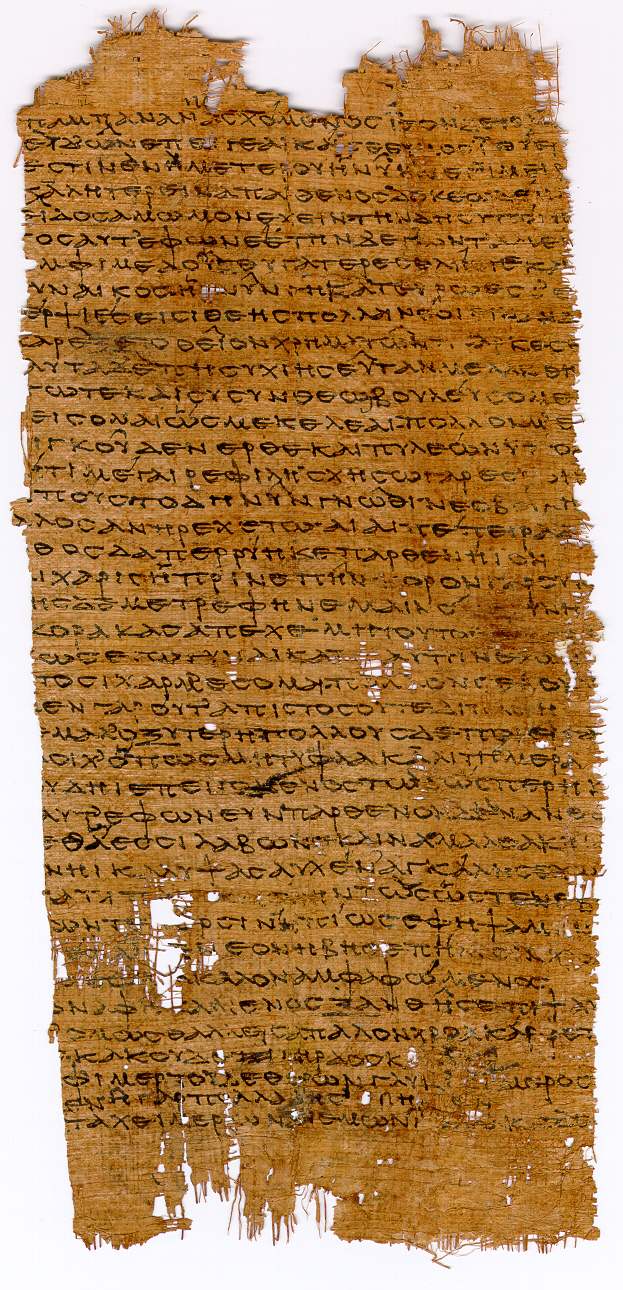
1. Archilochus (c. 680 to c. 640 BC)
A poet of the Greek island of Paros, Archilochus wrote about its war against neighboring Naxos. His most famous fragment makes light of losing a shield in battle: the speaker says a Thracian tribesman now enjoys it, and he will find another. Ancient tradition names a Naxian warrior, Calondas, as the man who killed him.
2. Tyrtaeus (7th century BC)
An elegiac poet of Sparta, Tyrtaeus wrote during the Second Messenian War and acted as a kind of state poet. His verses urged Spartans to fight to the death for their city. Some ancient writers claimed he was a Spartan general, a claim modern scholars treat as uncertain.
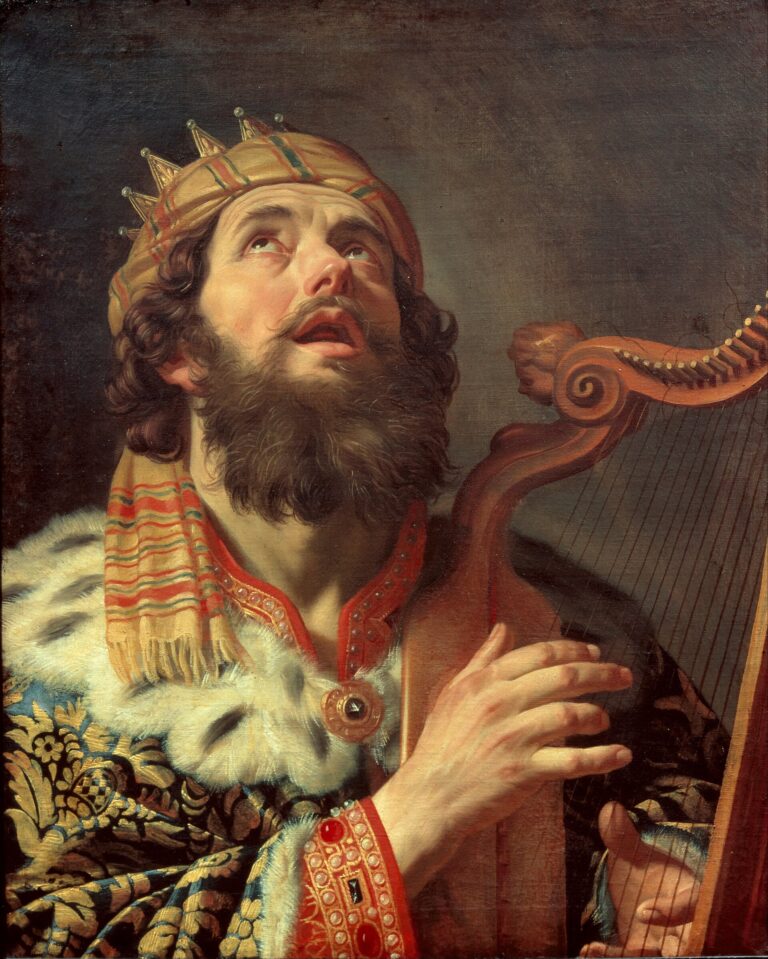
3. King David (Hebrew Bible)
The Book of Samuel describes David as the young fighter who killed the giant Goliath, a skilled lyre player, and the king who took Jerusalem. Nearly half of the Psalms have headings associating them with David, though those headings were added later and no psalm can be credited to him with certainty.
4. Aeschylus (c. 525 to c. 456 BC)
The Athenian playwright fought at Marathon in 490 BC, where his brother Cynegeirus was killed, and, by ancient accounts, at Salamis. His epitaph recorded his courage at Marathon and said nothing about his plays.
5. Sophocles (c. 496 to 406 BC)
The tragedian was elected one of Athens’ ten generals in 441 BC as a junior colleague of Pericles and served in the campaign against Samos. He lived to about ninety.
6. Horace (65 to 8 BC)
While studying in Athens, Horace was recruited by Brutus and made a military tribune in the republican army that lost the Battle of Philippi in 42 BC. He later wrote of fleeing without his shield. His Odes include the line “Dulce et decorum est pro patria mori.”
Celtic, Norse and Arabic Warriors
In early medieval Britain, Scandinavia and Arabia, poetry and fighting often belonged to the same people.
7. Aneirin (c. AD 600)
The Welsh poem Y Gododdin, traditionally credited to the bard Aneirin, mourns a war band that fought the Angles at Catraeth around AD 600, where nearly all the warriors were killed. It survives in a single manuscript, the Book of Aneirin, and scholars date its composition between the seventh and early eleventh centuries.
8. Antarah ibn Shaddad (6th to early 7th century)
A pre-Islamic Arab knight of the Banu Abs, Antarah was the son of an Ethiopian mother named Zabibah and grew up enslaved. According to traditional accounts, he won his freedom through his courage when a rival tribe attacked. His chief poem forms part of the Mu’allaqat.
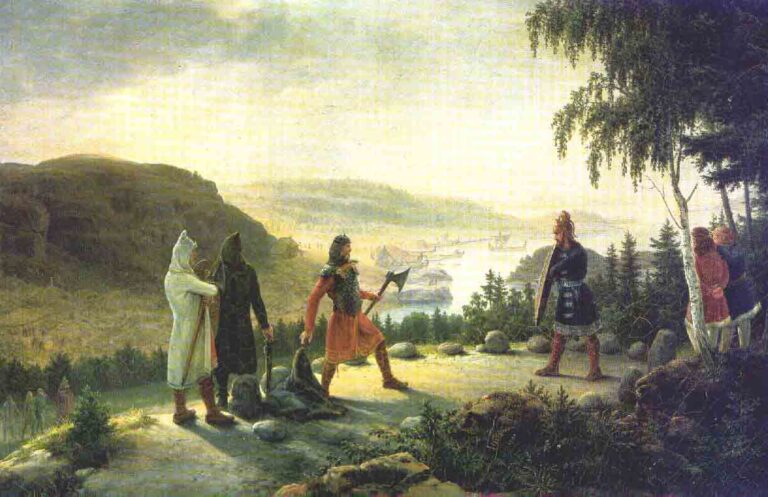
9. Egil Skallagrímsson (c. 904 to c. 995)
The hero of Egil’s Saga was a Viking warrior and skald. His poem Höfuðlausn is said to have bought back his life from Eiríkr Bloodaxe, and the lament Sonatorrek, attributed to Egil, for his own sons, has been called the birth of Nordic personal lyric poetry.
10. Abu Firas al-Hamdani (932 to 968)
A commander who proved himself as both a fighter and a poet, Abu Firas was captured by the Byzantines and held for several years in Constantinople. The poems he wrote there, al-Rūmiyyāt, are among his finest. He was killed in 968.
11. Harald Hardrada (c. 1015 to 1066)
The Norse king who was defeated and killed at Stamford Bridge in England in 1066 also composed skaldic poetry of his own.
Medieval Europe and Asia
Knights, troubadours, samurai and Chinese generals carried the tradition through the Middle Ages.
12. Bertran de Born (1140s to early 1200s)
A baron of the Limousin and one of the major Occitan troubadours, Bertran was best known for his political songs, or sirventes. Dante placed him in the Inferno, carrying his severed head like a lantern.
13. Richard the Lionheart (12th century)
Captured near Vienna in 1192 and held in Austria and Germany, Richard wrote the song “Ja nus hons pris” in prison, lamenting his captivity and the failure of his supporters to secure his release.
14. Taira no Tadanori (1144 to 1184)
A military leader and a student of the poet Fujiwara no Shunzei, Tadanori died at the Battle of Ichi-no-Tani. According to tradition, his body was identified by a signed poem fastened to his quiver, and Shunzei included one of his poems, without his name, in the anthology Senzaishū.
15. Cao Cao (c. 155 to 220)
The warlord who became Imperial Chancellor at the end of the Han dynasty is celebrated as a poet as well as a political and military leader.
16. Xin Qiji (1140 to 1207)
A poet, calligrapher and general, Xin Qiji rebelled against the Jurchen and, with only fifty men, rode into a Jurchen camp and captured the traitor Zhang Anguo. He became a master of ci poetry, often compared with Su Shi.
The Sixteenth and Seventeenth Centuries
This period produced soldier poets across Europe and East Asia, many of them wounded or imprisoned.
17. Garcilaso de la Vega (c. 1501 to 1536)
The Spanish soldier and poet who brought Italian Renaissance verse forms into Spanish poetry died in Nice in October 1536, twenty-five days after he was wounded in battle at Le Muy.
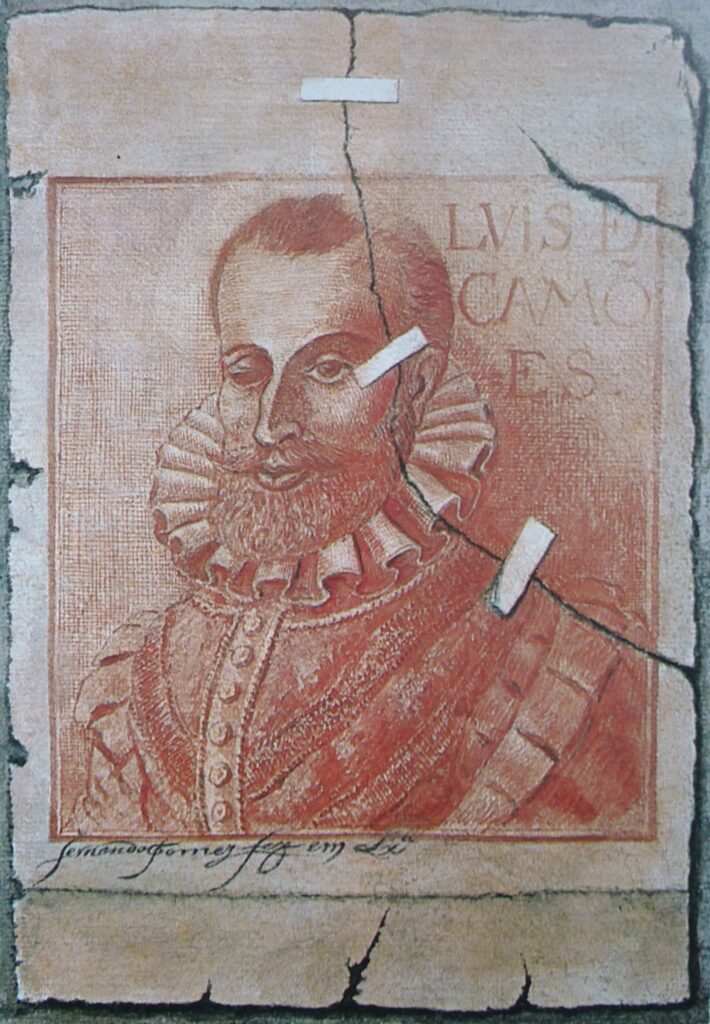
18. Luís de Camões (c. 1524 to 1580)
The Portuguese poet lost his right eye in battle and later served in Asia. According to tradition, he saved the manuscript of The Lusiads from a shipwreck, and it was published in 1572.
19. Uesugi Kenshin (1530 to 1578)
The daimyō who fought Takeda Shingen five times at Kawanakajima is traditionally credited with a death poem that compares a lifetime of prosperity to a single cup of sake and calls his forty-nine years a dream.
20. Yi Sun-sin (1545 to 1598)
The Korean admiral who won victories against the Japanese navy in the Imjin War inscribed his own poems on his sword blades and kept the war diary known as the Nanjung Ilgi. He died of a gunshot wound at the Battle of Noryang.
21. Miguel de Cervantes (1547 to 1616)
Cervantes was badly wounded at the Battle of Lepanto in 1571 and lost the use of his left hand. After five years in captivity he was ransomed, and he went on to write Don Quixote.
22. Sir Walter Raleigh (c. 1553 to 1618)
Raleigh fought with the Huguenots in France and in Ireland and became a statesman and explorer. He wrote The History of the World while imprisoned in the Tower of London and was beheaded in 1618.
23. Sir Philip Sidney (1554 to 1586)
The author of Astrophil and Stella, the first of the famous English sonnet sequences, was shot in the thigh at the Battle of Zutphen and died of gangrene twenty-six days later. The best-known story about him has him giving his water to another wounded soldier with the words “Thy necessity is yet greater than mine.”
24. Miyamoto Musashi (c. 1583 to 1645)
The Japanese swordsman is said to have been undefeated in sixty-two duels. He worked on The Book of Five Rings until shortly before his death in 1645 and left recognized masterpieces of calligraphy and ink painting.
25. Richard Lovelace (1617 to 1657)
A Cavalier soldier who served in the Bishops’ Wars and was later wounded at Dunkirk, Lovelace is best known for “To Althea, from Prison,” traditionally associated with his first imprisonment in 1642, and “To Lucasta, Going to the Warres.” Both appeared in his 1649 collection Lucasta.
26. Guru Gobind Singh (1666 to 1708)
The tenth Sikh Guru was a warrior, poet and philosopher who fought many battles against the Mughal Empire and the hill kings. He is credited with the Dasam Granth and wrote the Zafarnama, a defiant letter in Persian to the emperor Aurangzeb.
The Americas and the Age of Revolutions
From Aztec Mexico to the revolutions of the nineteenth century, poets fought for their people.
27. Nezahualcoyotl (1402 to 1472)
The warrior king of Texcoco allied with Tenochtitlan and Tlacopan to defeat the Tepanec Empire and is remembered as the Poet-King, though the authorship of many poems credited to him is debated.
28. Theodor Körner (1791 to 1813)
Körner joined the Lützow Free Corps against Napoleon and was killed near Gadebusch in August 1813, aged 21. His father published his battle songs in Berlin in 1814 as Leyer und Schwerdt, “Lyre and Sword.”
29. Lord Byron (1788 to 1824)
Byron joined the Greek War of Independence against the Ottoman Empire and took part of the rebel army under his own command, but a planned attack on the fortress of Lepanto never took place, and he died of fever at Missolonghi in April 1824 without seeing battle. Greeks revere him as a hero.
30. Mikhail Lermontov (1814 to 1841)
A Russian army officer, Lermontov fought at the Battle of the Valerik River in 1840 and turned it into the poem “Valerik.” He was killed in a duel with a fellow officer in 1841.
31. Sándor Petőfi (1823 to 1849)
Hungary’s national poet wrote the National Song, said to have inspired the revolution of 1848, then fought under General Józef Bem. He was last seen alive at the Battle of Segesvár in July 1849.
32. Sidney Lanier (1842 to 1881)
Lanier served in the Confederate Signal Corps, was captured in 1864, and contracted tuberculosis in the prison at Point Lookout, Maryland. He died of its complications in 1881.
33. José Martí (1853 to 1895)
The poet of Versos Sencillos was a key figure in planning Cuba’s war of independence and died in action at the Battle of Dos Ríos in May 1895.
The World Wars and After
The twentieth century’s soldier poets wrote some of the most widely read poems in English.
34. John McCrae (1872 to 1918)
A Canadian doctor who volunteered at 41 and served as medical officer and major in the artillery, McCrae wrote “In Flanders Fields” on 3 May 1915, the day after burying his friend Alexis Helmer. He died of pneumonia in January 1918.
35. Alan Seeger (1888 to 1916)
An American who volunteered for the French Foreign Legion, Seeger was killed at Belloy-en-Santerre in July 1916. His best-known poem begins “I have a rendezvous with Death.”
36. Siegfried Sassoon (1886 to 1967)
Awarded the Military Cross and nicknamed “Mad Jack” by his men, Sassoon publicly protested in 1917 that the war was being deliberately prolonged by those with the power to end it. At Craiglockhart hospital he met and encouraged Wilfred Owen.
37. Isaac Rosenberg (1890 to 1918)
A poet and artist who grew up in Stepney in London’s East End, Rosenberg served as a private and was killed on 1 April 1918. The critic Paul Fussell called his “Break of Day in the Trenches” the greatest poem of the war.
38. Wilfred Owen (1893 to 1918)
Owen earned the Military Cross for courage and leadership, though the award was announced only after he was killed on 4 November 1918, a week before the Armistice, at 25. Most of his poems, including “Dulce et Decorum Est” and “Anthem for Doomed Youth,” were published after his death.
39. Keith Douglas (1920 to 1944)
An English poet and soldier, Douglas wrote Alamein to Zem Zem, a memoir of the desert campaign in North Africa, and was killed in action during the invasion of Normandy in June 1944.
40. Yusef Komunyakaa (born 1940s)
Komunyakaa served in Vietnam as a writer for the military paper Southern Cross and earned a Bronze Star. His Vietnam collection Dien Cai Dau appeared in 1988, and Neon Vernacular won the 1994 Pulitzer Prize for Poetry.
What These Forty Have in Common
The men on this list came from more than twenty-six centuries and many cultures, and they did not agree about war. Tyrtaeus urged men to fight to the death; Owen called that kind of urging a lie; Richard the Lionheart and Abu Firas wrote poetry as prisoners. What they share is that each faced something that could cost him everything, and each left words that readers still return to. That is the record we are trying to learn from.
Sources
- Archilochus
- Egil Skallagrímsson
- Miyamoto Musashi
- Philip Sidney
- Wilfred Owen
- Plus the Wikipedia article on each person named