Archilochus of Paros was a Greek soldier and poet who lived in the seventh century BC, and he is one of the earliest warrior poets whose own words survive. He fought on the island of Thasos, against Thracian tribes, and in his home island’s war with Naxos, where, according to ancient tradition, he was killed. In between, he wrote some of the most honest lines about fear, failure, grief and endurance in all of Greek literature, along with an early Greek description of an eclipse of the sun.
| Lived | About 680 to 640 BC, by the dating most modern scholars accept |
| Known for | Plain-spoken war poetry, sharp invective, and the poem about throwing away his shield |
| The hardship | Fighting on the Thasos frontier, losses at sea, and the war between Paros and Naxos |
| Key work | About 300 fragments of elegy and iambic verse, known from quotations by ancient writers and from papyri found in Egypt |
Timeline
Dates for Archilochus are approximate, and scholars still debate them. This is the outline most accept.
| About 680 BC | Born on the island of Paros, son of Telesicles |
| Seventh century BC | Generally believed to have joined the Parian colony on Thasos, which tradition says his father founded, and fought the Thracians |
| 648 BC | An eclipse of the sun, commonly linked to his poem about day turning to night (other dates have also been proposed, including 660 and 711 BC) |
| About 645 to 640 BC | Killed in the war between Paros and Naxos, according to ancient tradition |
| Third century BC | A sanctuary in his honor, the Archilocheion, is established on Paros |
| 2005 | Dirk Obbink publishes a major new fragment of his poetry from the papyri of Oxyrhynchus |
Who Archilochus Was
Archilochus was born on Paros, an island in the Aegean Sea. According to ancient tradition, his father, Telesicles, founded a colony of Parian settlers on the northern island of Thasos. Ancient tradition named his mother as an enslaved woman called Enipo, but this has never been confirmed, and modern scholars note that the name itself carries connotations of abuse.
The Greeks told a charming story about how he became a poet. According to an inscription from Paros, young Archilochus was sent by his father to fetch a cow. On the way, he met the Muses, who took the cow and left him a lyre in its place, and the oracle at Delphi later confirmed the omen. Whatever the truth of the tale, a sanctuary in his honor, the Archilocheion, was established on Paros in the third century BC.
Ancient writers mentioned him in the same breath as Homer and Hesiod. The Roman rhetorician Quintilian praised his “greatest force of expression.” Ancient scholars even credited him with inventing elegy and iambic verse, although modern scholars think he more likely built on an older popular tradition.
War on Thasos and Naxos
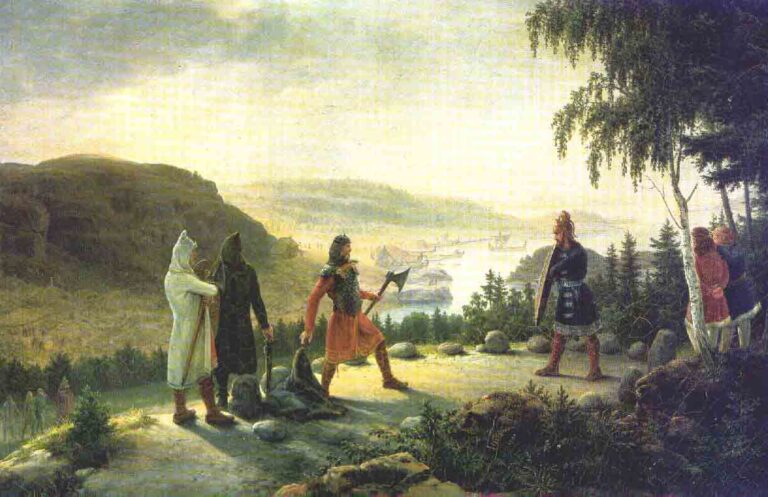
Archilochus did not write about war from a distance. He is generally believed to have joined the Parian colony on Thasos, where the settlers fought the Thracians who already lived in the region. His surviving lines about the place are bleak. In one fragment he calls it “Thasos, thrice miserable city,” and in another he says that “the woes of all the Greeks have come together in Thasos.”
Some later writers claimed he was a mercenary, fighting for pay. Whether he ever did is uncertain, and his surviving poems do not settle the question.
War was not the only danger. In a poem addressed to a man named Pericles, Archilochus mourns men who were lost when the waves of the sea swallowed them, a reminder that for island Greeks, the sea took lives as surely as battle did.
According to the traditional account, he later returned to Paros and fought in its war against neighboring Naxos. Ancient tradition says that he died in that war, killed by a Naxian warrior named Calondas. The story goes on to say that when Calondas later visited the temple of Apollo at Delphi, the oracle turned him away with the words “You killed the servant of the Muses; depart from the temple.”
How He Endured
What sets Archilochus apart is that he refused to pretend. To understand how bold that was, it helps to know what a shield meant to a Greek soldier. Many Greek warriors, and Spartans above all, were taught that throwing away your shield to escape a battle was a disgrace. The Greek biographer Plutarch, writing centuries later, records a Spartan mother handing her son his shield with the words “either with this or on it,” and the message was plain: come home with it, or do not come home.
Archilochus wrote a poem in which the speaker does exactly what that mother feared. He leaves his shield behind beside a bush, escapes with his life, and admits that a Thracian tribesman now enjoys it. Instead of hiding the failure, he shrugs it off, saying that he can always get another shield that is just as good. Later Greeks were scandalized. The politician and philosopher Critias attacked the poem as disgraceful, and Plutarch reports that when Archilochus came to Sparta, he was expelled because of it. The poem may or may not describe a real day in his life, but its attitude has kept it famous for more than two thousand years.
That honesty extended to his idea of what a good soldier looks like. In one fragment, he says he has no liking for a tall general who swaggers when he walks. He would rather have a short man, a little bow-legged, who stands firmly on his feet. For Archilochus, the measure of a fighter was what he did when it counted, not how he looked on parade.
Above all, his poems keep returning to one idea: endurance. When men were lost at sea, he did not tell Pericles that grief was weak. He told him that the gods had given people a remedy for sorrows that cannot be cured, and that the remedy was to endure. In another poem, he speaks to his own heart and orders it to stand up and face its enemies.
His personal life was hard, too. The ancient story says that a man named Lycambes promised Archilochus his daughter Neobule, then broke off the engagement. Archilochus answered with poems so savage that, according to the legend, Lycambes and his daughters took their own lives. Some modern scholars think Lycambes and his family were stock characters in a traditional kind of entertainment, rather than real people, so this part of his story should be read as legend.
In His Own Words
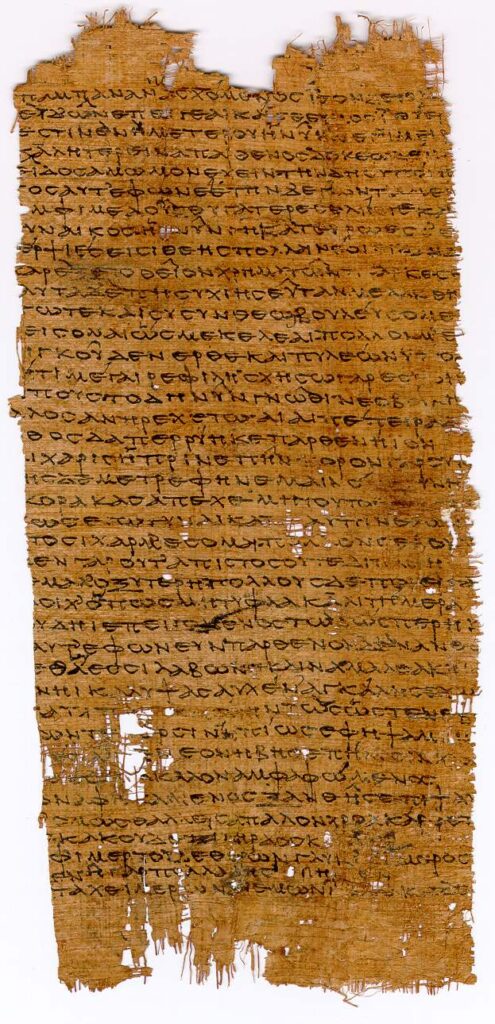
Only fragments of his work survive, some quoted by later ancient writers and others recovered from papyri found in Egypt. About 300 fragments are known, along with around forty ancient paraphrases. The lines below are English translations, and each translator renders the Greek in a slightly different way.
The Lost Shield
His most famous poem begins with the shield he left behind. In one modern translation:
“One of the Saians now delights in the shield I discarded”
What it means: The speaker admits that an enemy tribesman now owns his shield. He would rather be alive, and honest about it, than dead with his reputation intact.
Endurance as Medicine
From the poem to Pericles, after men were lost at sea, in a translation by the classics site Sententiae Antiquae:
“But the gods, dear friend, have set
Powerful endurance as our medicine for untreatable
Evils.”
What it means: Some losses cannot be fixed. What we can do is endure them, and Archilochus treats that endurance as a gift, not a defeat.
Heart, My Heart
The opening of a poem in which he talks to his own spirit, in M. L. West’s translation:
“Heart, my heart, with helpless, sightless troubles now confounded,
up, withstand the enemy, opposing breast to breast.”
What it means: When troubles crowd in from every side, he does not wait for them to pass. He speaks to himself like a commander to a soldier, and orders his heart to stand and fight.
The Short General
On the kind of leader he trusted, in Douglas Gerber’s translation (1999):
“Let mine be one who is short, has a bent look about the shins, stands firmly on his feet”
What it means: Looks do not win battles. He wants the plain, steady man who holds his ground.
Darkness at Noon
From his poem about an eclipse of the sun, in the Sententiae Antiquae translation:
“Nothing is unexpected, nothing is foresworn and
Nothing amazes now that father Zeus the Olympian
veiled the light to make it night at midday”
What it means: After seeing day turn into night, the poem’s speaker decides that nothing can surprise him anymore. It is a poet’s way of saying that the world is less predictable than we think.
The Fox and the Hedgehog
A single line that later inspired the philosopher Isaiah Berlin’s famous essay The Hedgehog and the Fox:
“A fox knows many things, but a hedgehog knows one big thing.”
What it means: Many clever tricks are not always better than one thing done well.
Legacy
Archilochus mattered to the poets who came after him. The Roman poet Horace, who fought on the losing side at Philippi in 42 BC, wrote in one of his odes of fleeing without his shield, a passage often read as modeled on Archilochus’s shield poem. Not everyone approved of him: the Roman writer Valerius Maximus says that the Spartans banned his works for the sake of their children.
He also gave history a remarkable document. His poem about day turning into night is an early Greek description of an eclipse of the sun, and historians still use it in debates over when he lived. The lines are spoken by a character, so whether Archilochus saw the eclipse himself is uncertain.
His work is still being recovered. The 2005 publication of a new fragment from the papyri of Oxyrhynchus, an elegy about the Greeks’ disastrous clash with Telephus, king of Mysia, before the Trojan War, has, in one scholar’s words, transformed our understanding of Archilochus.
What Archilochus Teaches
Archilochus lived nearly 2,700 years ago, yet his record still holds lessons for anyone working to become stronger. These are the ones we are training to live by.
Tell the Truth about a Setback
The shield poem is a reminder that a failure admitted is easier to recover from than a failure hidden. The speaker loses something valuable in battle, names the loss plainly, and moves on. Owning a setback, out loud, is often the first step to getting past it.
Treat Endurance as a Skill
Archilochus called endurance a medicine, which means it can be practiced, like any skill. Each hard morning we get through, in training or in life, builds the capacity for the next one.
Command Yourself
When he wrote “Heart, my heart,” Archilochus showed a habit that soldiers and poets have relied on ever since: naming what you feel, then speaking to yourself the way a good leader speaks to someone who needs to keep going.
Value Substance over Show
His short, bow-legged general is a picture of someone who is useful when things go wrong. In work, in training, and in family life, the people worth following are usually the ones who stand firm, not the ones who look the part.
Further Reading
For readers who want to go deeper, these editions collect his surviving poems in English.
- Douglas E. Gerber, Greek Iambic Poetry (Loeb Classical Library, 1999), with the Greek text and a facing English translation
- Laura Swift, Archilochus: The Poems (Oxford University Press, 2019), with an introduction, translation and commentary
- Guy Davenport, Carmina Archilochi: The Fragments of Archilochos (1964)
Related Warrior Poets
Archilochus appears throughout our guides to the warrior poet tradition.
- What Is a Warrior Poet?
- The Warrior Poet: A History from Ancient Greece to the Trenches
- Famous Warrior Poets: 40 Who Went to War and Wrote
Frequently Asked Questions
Did Archilochus Really Throw Away His Shield?
Nobody knows. His famous poem has a speaker who leaves his shield behind to save his life, but scholars cannot tell whether it describes a real event in his life or a character he created. Either way, ancient readers took it personally, and the Spartans are said to have expelled him for it.
How Did Archilochus Die?
According to ancient tradition, he was killed in the war between Paros and Naxos by a Naxian warrior named Calondas, who was later turned away from the temple of Apollo at Delphi for having killed “the servant of the Muses.”
Why Is Archilochus Important?
He is one of the earliest Greek poets whose personal voice survives, ancient writers mentioned him alongside Homer and Hesiod, and his work includes an early Greek description of a solar eclipse. For the warrior poet tradition, he is one of the first soldiers whose own honest words about fear and failure survive.
Sources
- Archilochus (Wikipedia), including the fragments quoted, with Douglas E. Gerber’s translation of fragment 114
- Bernd Seidensticker, “Archilochus and Odysseus,” Greek, Roman and Byzantine Studies (1978)
- Sententiae Antiquae, fragment 13
- Sententiae Antiquae, the eclipse fragment 122
- Plutarch, Sayings of Spartan Women, via Sententiae Antiquae
- Fragment 128, trans. M. L. West
- Brewminate, on the eclipse of 648 BC
- Laura Swift, “Telephus on Paros,” Classical Quarterly (2014)
- Armand D’Angour, “Braggart Soldier”