The warrior poet tradition runs for more than 2,600 years, from Greek soldier poets of the seventh century BC to American veterans of the Vietnam War. Over that time, its tone changed.
Early warrior poets often wrote to praise courage and stir men to fight; by the First World War, poets such as Wilfred Owen and Siegfried Sassoon were exposing what fighting cost, even as others continued to celebrate courage and patriotic sacrifice. What stayed the same was the pattern of a real struggle followed by words that came out of it.
This history follows the tradition across cultures and centuries. It is not a complete list. For short profiles of forty individual figures, see our guide to famous warrior poets.
Ancient Greece: Courage, Candor and Civic Duty
Among the earliest warrior poets whose words survive were Greeks. Archilochus of Paros, active roughly between 680 and 640 BC, wrote about war with unusual candor, including his island’s conflict with neighboring Naxos. In his best-known fragment, the speaker admits that a Thracian tribesman now enjoys the shield he threw away in battle, and shrugs that he will find another. According to ancient tradition, Archilochus was later killed by a Naxian warrior.
His near-contemporary Tyrtaeus wrote for Sparta during the Second Messenian War, acting as a kind of state poet. His elegies urged citizens to fight to the death for their city. Between them, these two poets show two roles that recur in the tradition: the poet who tells the plain truth about fear, and the poet who calls others to courage.
In Athens, the link between public service and poetry was close. Aeschylus fought at Marathon in 490 BC, where his brother was killed, and, by ancient accounts, at Salamis. His epitaph commemorated his courage at Marathon rather than his plays. Sophocles, the next great tragedian, was elected one of Athens’ ten generals in 441 BC, serving as a junior colleague of Pericles in the campaign against Samos.
Rome: The Poet Who Fled
Horace, born in 65 BC, was studying in Athens when Brutus came recruiting after the murder of Julius Caesar. Horace became a military tribune in the republican army, which was defeated at Philippi in 42 BC. He later wrote of fleeing that day without his shield. Yet the same poet wrote one of the most famous lines about patriotic sacrifice: “Dulce et decorum est pro patria mori,” it is sweet and honorable to die for one’s country.
Celtic and Norse Warriors: The Bard and the Skald
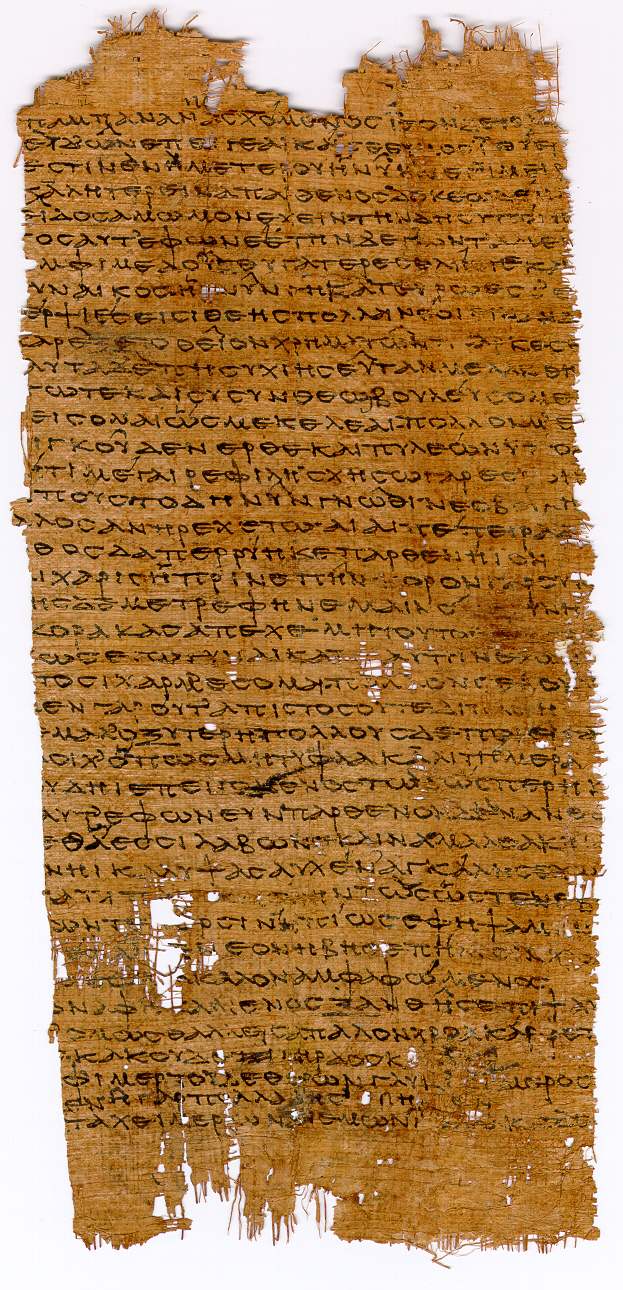
In early medieval Britain, the Welsh poem Y Gododdin mourns a war band that rode out to fight the Angles at a place called Catraeth around AD 600, where nearly all of them were killed. The poem is traditionally credited to the bard Aneirin. It survives in a single manuscript, the Book of Aneirin, and scholars date its composition anywhere from the seventh to the early eleventh century.
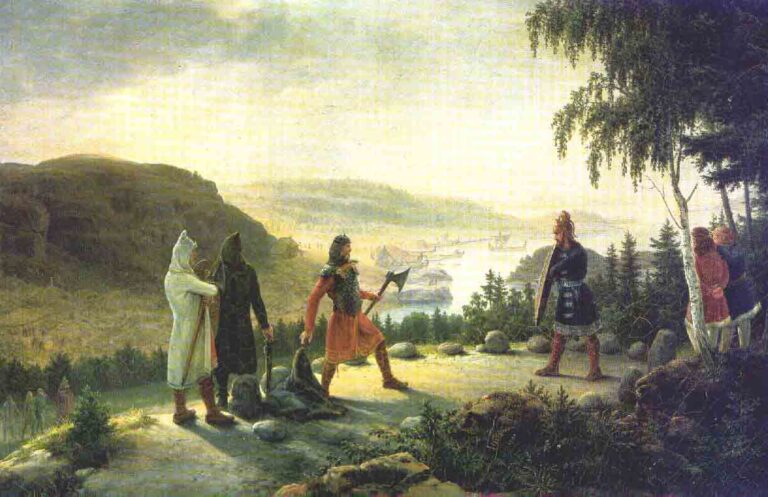
In Scandinavia, the warrior and the poet were often the same man. Egil Skallagrímsson, who lived in the tenth century, appears in the sagas as both a fearsome fighter and a gifted skald. His lament for his own sons, attributed to him in the saga tradition, has been called the birth of Nordic personal lyric poetry. Kings composed too: Harald Hardrada, killed at Stamford Bridge in England in 1066, composed skaldic verse of his own.
The Arabic World: Knights and Captives
Some of the great poets of pre-Islamic Arabia were fighters. Antarah ibn Shaddad, a knight of the Banu Abs tribe born to an Ethiopian mother, grew up enslaved and, according to traditional accounts, earned his freedom through his courage when a rival tribe attacked. His chief poem forms part of the Mu’allaqat, a collection of early Arabic odes.
Four centuries later, Abu Firas al-Hamdani, who proved himself as both a fighter and a poet, was captured by the Byzantines and held for several years in Constantinople. The poems he wrote in captivity, known as al-Rūmiyyāt, are counted among his finest work.
Medieval Europe: Troubadours and a Captive King
The troubadours of southern France added a new voice. Bertran de Born, a baron of the Limousin active in the late twelfth century, wrote some love songs but was best known for his political songs, called sirventes. Dante later placed him in the Inferno, carrying his severed head like a lantern.
Richard the Lionheart, king of England, was captured near Vienna in 1192 and held in Austria and Germany. In prison, Richard wrote the song “Ja nus hons pris,” lamenting his captivity and the failure of his supporters to secure his release. A king famous for war is remembered here for a song about loneliness.
China, Japan and Korea: Generals Who Wrote
In China, the warlord Cao Cao, who became Imperial Chancellor of the collapsing Han dynasty in 208, is celebrated for his poems as well as his campaigns. Xin Qiji, a twelfth-century general who rebelled against the Jurchen and, with only fifty men, rode into a Jurchen camp and captured the traitor Zhang Anguo, became one of the great writers of ci poetry, often compared with Su Shi.
Japan’s warrior class came to prize skill in both letters and arms, an ideal known as bunbu ryōdō. Taira no Tadanori, a commander and a student of the poet Fujiwara no Shunzei, died at the Battle of Ichi-no-Tani in 1184; according to tradition, his body was identified by a signed poem fastened to his quiver. Japanese warriors also wrote death poems as they faced the end. The daimyō Uesugi Kenshin, who died in 1578, is traditionally credited with one that calls a life of forty-nine years a dream. Miyamoto Musashi, the duelist who is said to have been undefeated and who died in 1645, finished The Book of Five Rings in the last months of his life and left celebrated ink paintings.
In Korea, Admiral Yi Sun-sin defeated Japanese fleets during the Imjin War and kept the war journals now known as the Nanjung Ilgi, part of UNESCO’s Memory of the World register. He inscribed poems on the blades of his swords. He was killed by a gunshot at the Battle of Noryang in December 1598.
The Renaissance: Soldier Poets of Spain, Portugal and England
The sixteenth century produced a remarkable run of soldier poets. Garcilaso de la Vega, the Spaniard who brought Italian verse forms into Spanish poetry, died in 1536 from a wound received in battle at Le Muy. Luís de Camões lost his right eye in battle, served the Portuguese in Asia, and, according to tradition, saved the manuscript of his epic The Lusiads from a shipwreck; it was published in 1572. Miguel de Cervantes lost the use of his left hand at the Battle of Lepanto in 1571 and spent five years as a captive before he wrote Don Quixote.
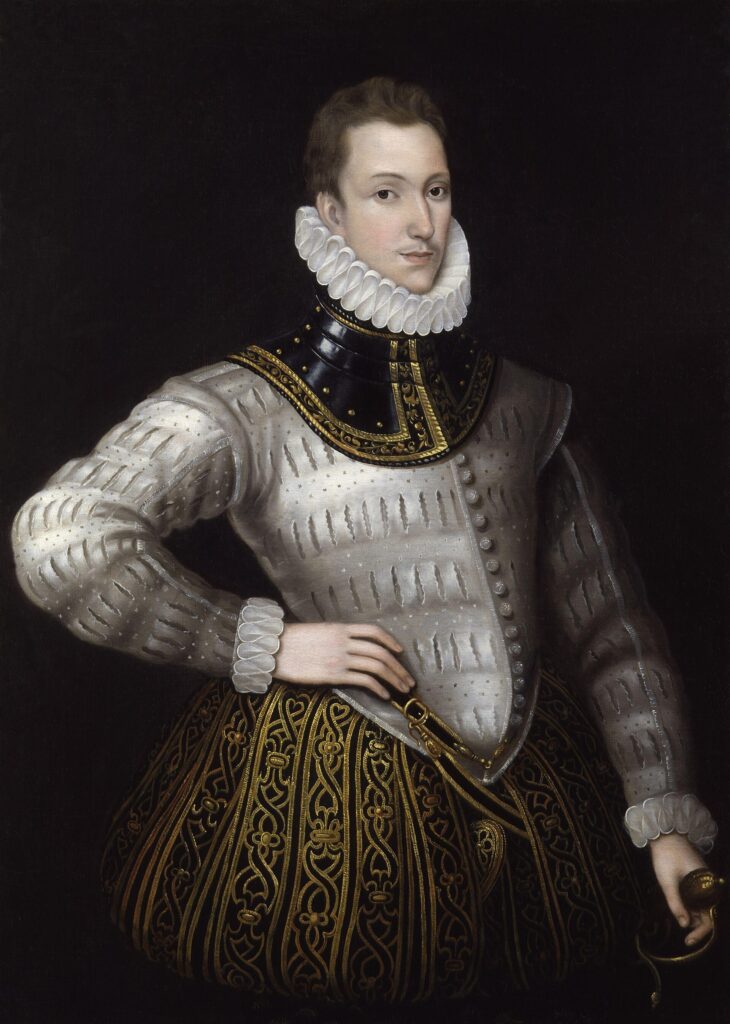
In England, Sir Philip Sidney wrote Astrophil and Stella, the first of the famous English sonnet sequences, and a classic defense of poetry, then died in 1586 of a wound received at Zutphen. Sir Walter Raleigh, soldier, explorer and poet, wrote his History of the World while imprisoned in the Tower of London and was beheaded in 1618. In the next generation, the Cavalier soldier Richard Lovelace is traditionally believed to have written “To Althea, from Prison” during his first imprisonment in 1642, giving the language the line “Stone walls do not a prison make.”
The Nineteenth Century: Poets of Liberty
The age of revolutions turned many poets into volunteers. Theodor Körner joined the Lützow Free Corps against Napoleon and was killed in August 1813 at the age of 21; his father published his battle songs the next year. Lord Byron joined the Greek War of Independence and died of fever at Missolonghi in 1824, and Greeks still honor him as a hero. In Russia, Mikhail Lermontov turned his experience at the Battle of the Valerik River in 1840 into a poem of the same name before he was killed in a duel in 1841.
Sándor Petőfi, whose National Song is said to have inspired the Hungarian Revolution of 1848, fought under General Józef Bem and was most likely killed at the Battle of Segesvár in 1849. José Martí, the Cuban poet of Versos Sencillos, helped plan Cuba’s war of independence and died in action at Dos Ríos in 1895. In the United States, the Confederate soldier Sidney Lanier contracted tuberculosis in a Union military prison and died of its complications in 1881.
The First World War: Telling the Truth
In the First World War, the tone of the tradition shifted. John McCrae, a Canadian doctor serving as a major in the artillery, wrote “In Flanders Fields” on 3 May 1915, the day after burying a friend killed at the Second Battle of Ypres. The poem still carried the old call to take up the fight.
Soon, the tone darkened. Wilfred Owen, who earned the Military Cross (announced after his death) and was killed a week before the Armistice in 1918, called Horace’s famous line “The old Lie.” His friend Siegfried Sassoon, nicknamed “Mad Jack” by his men for his near-suicidal exploits, publicly protested in 1917 that the war was being deliberately prolonged by those with the power to end it. Isaac Rosenberg, a poet and artist from London’s East End who served as a private, wrote “Break of Day in the Trenches” before he was killed in April 1918. The American Alan Seeger, fighting in the French Foreign Legion, wrote “I Have a Rendezvous with Death” and was killed in 1916.
After 1918: Witnesses
Poets of later wars continued to write from direct experience. Keith Douglas, an English poet and soldier, fought in the North African desert, wrote the memoir Alamein to Zem Zem, and was killed in Normandy in June 1944. Yusef Komunyakaa served in Vietnam as a writer for the military paper Southern Cross, earning a Bronze Star, and later wrote Dien Cai Dau about the war; his book Neon Vernacular won the 1994 Pulitzer Prize for Poetry.
What the History Teaches
Across all these centuries, the warrior poets show two kinds of courage.
One is the courage to face the fight. The other is the courage to tell the truth about it afterward, whether that truth is Archilochus laughing about his lost shield, Richard alone in his cell, or Owen exposing an old lie.
For readers who will never see a battlefield, that second kind of courage may be the more useful one. Hard times do pass, and the people in this history show what it looks like to come through and leave an honest record.
Sources
- Archilochus
- Horace
- Taira no Tadanori
- Luís de Camões
- Wilfred Owen
- Plus the Wikipedia article on each person named