The warrior poet archetype is the image of a person who unites strength and sensitivity: someone able to face danger and act decisively, and also able to feel deeply, think clearly and put experience into words. It appears across cultures, from the Japanese ideal of bunbu ryōdō to the Renaissance courtier, and it is less a set of hobbies than a way of meeting life.
This page looks at what the archetype means, where it comes from, how it differs from related ideas, and what real people in the tradition show about living it.
What an Archetype Is
An archetype is a recurring pattern or figure that shows up in stories, myths and cultures across the world. An archetype is not a job description. It is a shape that many different lives can fill.
The warrior poet is one such shape. The website TV Tropes, which catalogs recurring patterns in fiction, puts the key point well when it says the warrior poet trope “is about a mindset rather than hobbies.” A soldier who happens to read poetry on leave is not quite the archetype. The archetype appears when the fighting and the writing come from the same place, so that a person’s poetry shapes how they face danger and their struggles shape what they write.
Two Halves of One Person
The archetype joins two sets of qualities that are often treated as opposites. The warrior half brings courage, discipline, endurance and the willingness to act. The poet half brings attention, honesty, feeling and the ability to find meaning and say it well.
Either half alone can go wrong. Strength without reflection can turn into brutality, and reflection without strength can turn into talk that never reaches action. The appeal of the warrior poet is the promise that a person can be both tough and thoughtful, and that each quality keeps the other honest.
Origins of the Archetype
Several traditions arrived at a similar ideal.
Japan: Bunbu Ryōdō
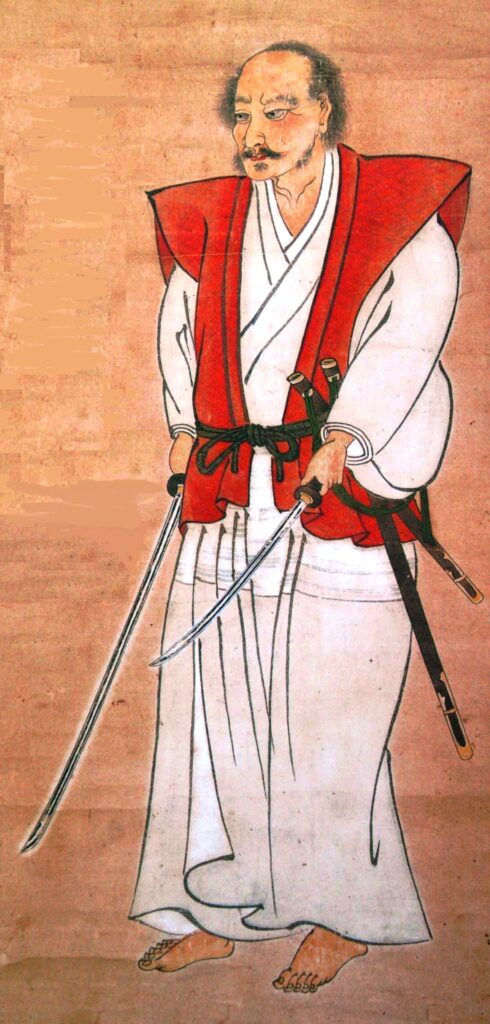
Japanese has a four-character phrase for the ideal, bunbu ryōdō (文武両道), joining the characters for letters and learning (文) and for arms (武) with the phrase for “both ways.” Japanese tradition admired historical figures who were equally able to lead armies and to compose poems. The swordsman Miyamoto Musashi, who finished The Book of Five Rings in 1645 and left celebrated ink paintings and calligraphy, is a well-known example of a warrior who excelled at both. The phrase survives today as praise for a student who excels at both study and sport.
Renaissance Europe: The Courtier
In 1528, Baldassare Castiglione’s Book of the Courtier was published in Venice. It described the ideal gentleman of the Italian courts as someone with a warrior spirit and athletic skill who also had a good knowledge of the humanities.
The Ancient World
Much older examples exist. The Book of Samuel presents King David as both the fighter who killed Goliath and a skilled lyre player, and nearly half the Psalms have headings associating them with David, though scholars cannot attribute any of them to him with certainty. In Greece, the playwright Aeschylus fought at Marathon and, by ancient accounts, at Salamis.
The Warrior Poet and the Warrior Archetype
Readers interested in masculine archetypes often meet the Warrior in King, Warrior, Magician, Lover, a 1990 book, rooted in the ideas of Carl Jung, by Robert Moore and Douglas Gillette. The book describes four archetypes that it says make up the mature masculine psyche: the King, the Warrior, the Magician and the Lover.
The warrior poet sits close to a combination of the Warrior and the Lover in that framework: disciplined action joined to feeling and attachment to life. The difference is that the warrior poet is not a psychological model but a historical pattern. We can point to real people, with dates and surviving work, who lived it. That is why this site focuses on biography rather than theory.
The Shadow Side: Glory and Its Critics
Any honest look at the archetype has to deal with its dangers, including poetry that makes dying in war sound noble. The Roman poet Horace, himself a veteran of the losing side at Philippi, wrote the line “Dulce et decorum est pro patria mori,” it is sweet and honorable to die for one’s country.
The First World War produced the most powerful answer from inside the tradition. Wilfred Owen, an officer killed a week before the 1918 Armistice, called Horace’s line “The old Lie.” His friend Siegfried Sassoon, decorated for gallantry in a raid on enemy trenches, publicly protested in 1917 that the war was being deliberately prolonged by those with the power to end it. Their example shows that the mature form of the archetype includes the courage to tell the truth about violence, not just the courage to use it.
Beyond the Battlefield
The archetype does not need a war. W. E. Henley, who lost a leg to tuberculosis as a teenager, wrote “Invictus” while recovering in hospital in 1875. Audre Lorde described herself as a “warrior, poet” among other identities and wrote The Cancer Journals after her first cancer diagnosis. Both faced long, serious struggles and turned them into words that others still carry into their own hard times.
This is the version of the archetype that matters most for most readers. Few of us will fight in battle, but nearly everyone faces illness, loss, failure or fear at some point. The warrior poet pattern is a way of facing those things: with discipline in what we do, and honesty in how we understand and describe it.
Signs of the Archetype in Real Lives
Looking across the people we profile, a few patterns recur.
They acted under pressure: Richard Lovelace is traditionally believed to have written “To Althea, from Prison” while imprisoned in 1642, insisting that “Stone walls do not a prison make.”
They kept their humanity in danger: Sir Philip Sidney, mortally wounded at Zutphen in 1586, is remembered, in a story told about him, for giving his water to another wounded soldier. They made art even at the edge of death: according to tradition, Taira no Tadanori’s body was identified after the Battle of Ichi-no-Tani by a poem fastened to his quiver.
And they told the truth, even when it cost them. The clearest example is the oldest. Spartan soldiers were expected to come home with their shields or not at all. Archilochus wrote a poem in which the speaker leaves his shield behind to save his life, and shrugs that he can always get another. Later Greeks were scandalized, and the Greek biographer Plutarch says the Spartans expelled him for it. Yet the poem has lasted some 2,600 years.
None of these people were flawless, and we do not present them as heroes to copy in every respect. What they offer is evidence that strength and sensitivity can live in the same person under the worst conditions. The archetype is not only something to admire. It is who we aspire to become, and that is why we study these lives, and why we train.